

If the word creatine seems to come up far more often than it used to, you are not imagining it. Creatine is the fastest-growing category in sports nutrition in 2026 — and the more interesting part is not the number, it is who is buying it. No longer just bodybuilders.
The short version
- Creatine is the most heavily researched supplement in the whole sports category.
- Take 3–5 g a day, consistently. No loading phase, no special timing.
- The form to buy is monohydrate. The others cost more with no evidence they work better.
- It takes 3–4 weeks of daily use to do anything. A single dose does nothing.
17.9% — annual growth rate of the global creatine market to 2030
3–5 g — the daily amount used in most studies
1–2 g — what the body makes on its own each day
01 What creatine actually is
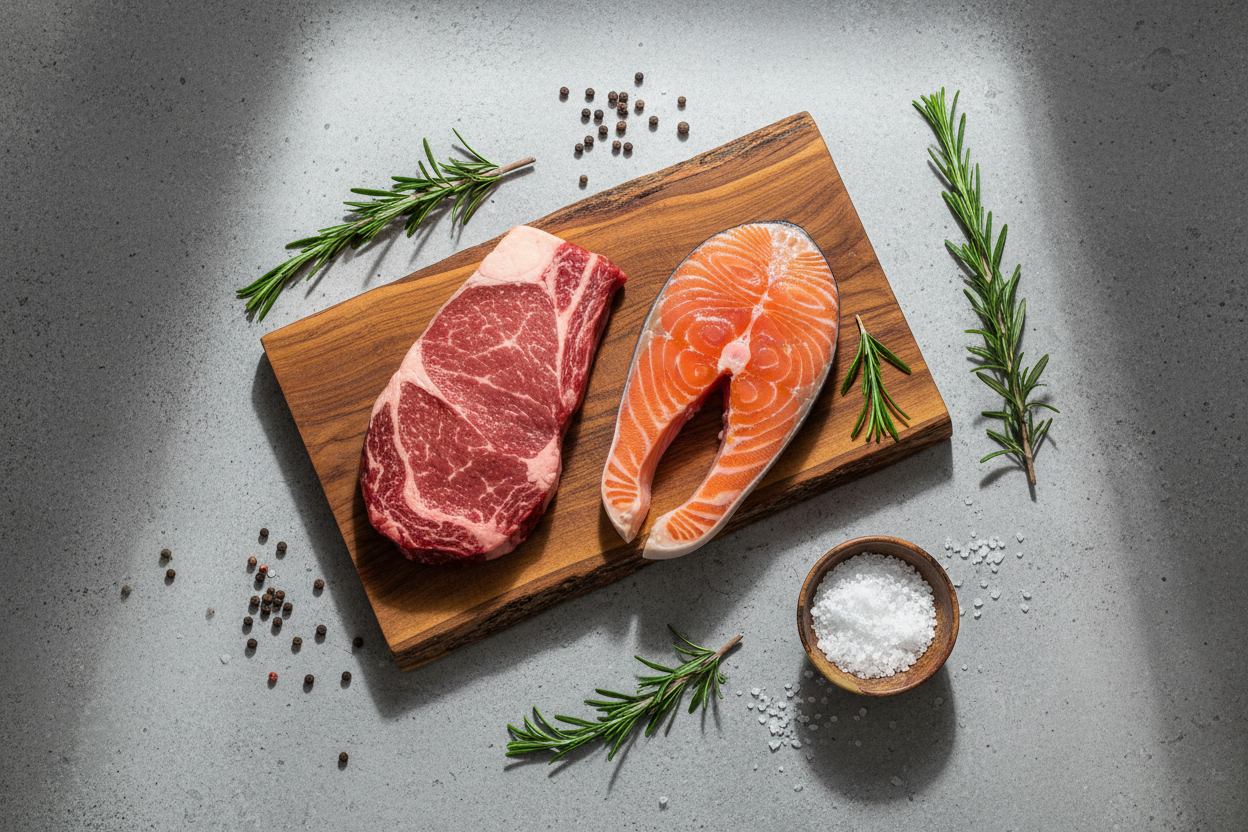
Creatine is not a hormone, not a steroid and not a banned substance. It is a compound the body makes itself from three amino acids — glycine, arginine and methionine — in the liver, kidneys and pancreas, at roughly 1–2 g a day. The rest comes from food, mainly red meat and fish.
Red meat and fish are the main dietary sources, but you would have to eat a great deal every day to match the amounts used in research. That is why most people use a supplement instead.
In muscle, creatine is stored as phosphocreatine and acts like a backup battery for the ATP system the body uses for short, hard efforts in the first 5–10 seconds.
02 Why the trend got louder in 2026
The compound has not changed. What changed is who is taking it. Creatine used to be seen as a bodybuilder's product. Three new groups have arrived.
- Women who lift. The old fear was bulking up. Once it is clear that adding muscle requires both resistance training and a sustained energy surplus over months, that fear falls away. This has been a strong trend in women's fitness.
- People over 40. Losing muscle mass with age is normal, so creatine is increasingly paired with resistance training in this group.
- People working long hours on little sleep. Research on creatine and cognitive function is under way but not settled. Anyone selling on that basis is overclaiming.
03 How to take it properly
| Question | Answer |
|---|---|
| Dose | 3–5 g a day. Larger people may use slightly more. |
| Timing | Any time. Consistency matters far more than timing. |
| Loading | Not necessary. Loading only reaches saturation sooner, and often causes stomach discomfort. |
| What to mix it with | Plain water is fine. Mixing into protein or a meal works too. |
| When you notice anything | After 3–4 weeks of daily use. One day does nothing. |
| Rest days | Keep taking it. The goal is to hold a steady level in the muscle. |
04 Monohydrate versus the rest — what the extra money buys
The market is full of exotic names: creatine HCl, ethyl ester, buffered creatine, creatine nitrate. The reality is that creatine monohydrate has by far the most research behind it, and no other form has clearly shown itself to be better. Paying two to three times more is unnecessary for most people. What is worth checking instead is raw-material purity, per-lot lab results and the registration number on the label.
05 Powder or capsules
| Criterion | Powder | Capsules |
|---|---|---|
| Cost per day | Clearly cheaper | Higher |
| Convenience | Needs measuring and mixing | Easy to carry, take immediately |
| Adjusting the dose | Fine control by body weight | Adjust by the capsule |
| Who it suits | Daily long-term users who already mix protein | Beginners, frequent travellers, anyone who dislikes mixing drinks |
The compound is identical. The only differences are convenience and cost per gram.
06 The five myths that keep coming back
- “It makes you puffy.” Creatine draws water into the muscle cell, not under the skin.
- “It damages the kidneys.” In people with normal kidney function, long-term studies find no harm at standard doses. What does rise is blood creatinine, which can make a blood panel look alarming — tell your doctor before testing.
- “It causes hair loss.” This traces back to a single 2009 study in 20 rugby players that no one has successfully replicated.
- “You have to load 20 g first.” Loading only reaches saturation in 5–7 days instead of 3–4 weeks. The end point is the same.
- “Women get bulky.” Adding muscle mass needs consistent resistance training plus an energy surplus. No single supplement does it.
Buying for the first time? If you have never taken it, start with a small size or capsules for a month to see that you tolerate it and can actually keep it up. Then move to the large size, which is far better value over time.
Frequently asked questions
Can I take it if I do not train at all?
- You can, but the benefit is much smaller. Creatine works alongside short, hard efforts.
Can I take it with whey?
- Yes. Tip it straight into your whey shake. There is no problematic interaction.
What happens if I stop?
- Muscle creatine returns to baseline over 4–6 weeks. There is no withdrawal.
Do I need to cycle off?
- No. Continuous use works better.
Related products
Creatine monohydrate, made in a GMP-certified facility, Thai FDA registered, with per-lot traceability.
- Creatine Monohydrate powder — the lowest cost per day, roughly 100–160 days per bag.
- Creatine Monohydrate capsules — easy to carry, nothing to measure, good for starting out.
- Muscle & recovery — protein, amino acids and the rest in one place.
This article provides general nutritional information for education. It is not medical advice. Dietary supplements are not medicines and do not treat, relieve or prevent any disease. Eat a varied diet. Anyone with a medical condition or taking medication should speak to a doctor before changing their nutrition.


