

Most people measure a diet by one number on the scale. That number hides the part that matters: what you lost. Fat and muscle both come off in a calorie deficit, and how the split falls is largely decided by two things — how much protein you eat and whether you train.
The short version
- In fast weight loss, 40–60% of the weight lost can come from muscle, not fat.
- The adult reference range is 0.8–2.0 g of protein per kg of body weight per day, depending on activity level.
- 2–3 resistance sessions a week is the figure that keeps showing up in the literature.
- Protein spread across meals beats one large serving.
01 · Why losing muscle works against you
Muscle is metabolically active tissue. Lose it and daily energy expenditure drops, which is the mechanism behind the classic pattern: the diet works, then stalls, then the weight comes back — often with a worse body composition than before you started.
The scale cannot tell you which tissue left. That is why "I lost 5 kg" is an incomplete sentence.
02 · Three points the research agrees on
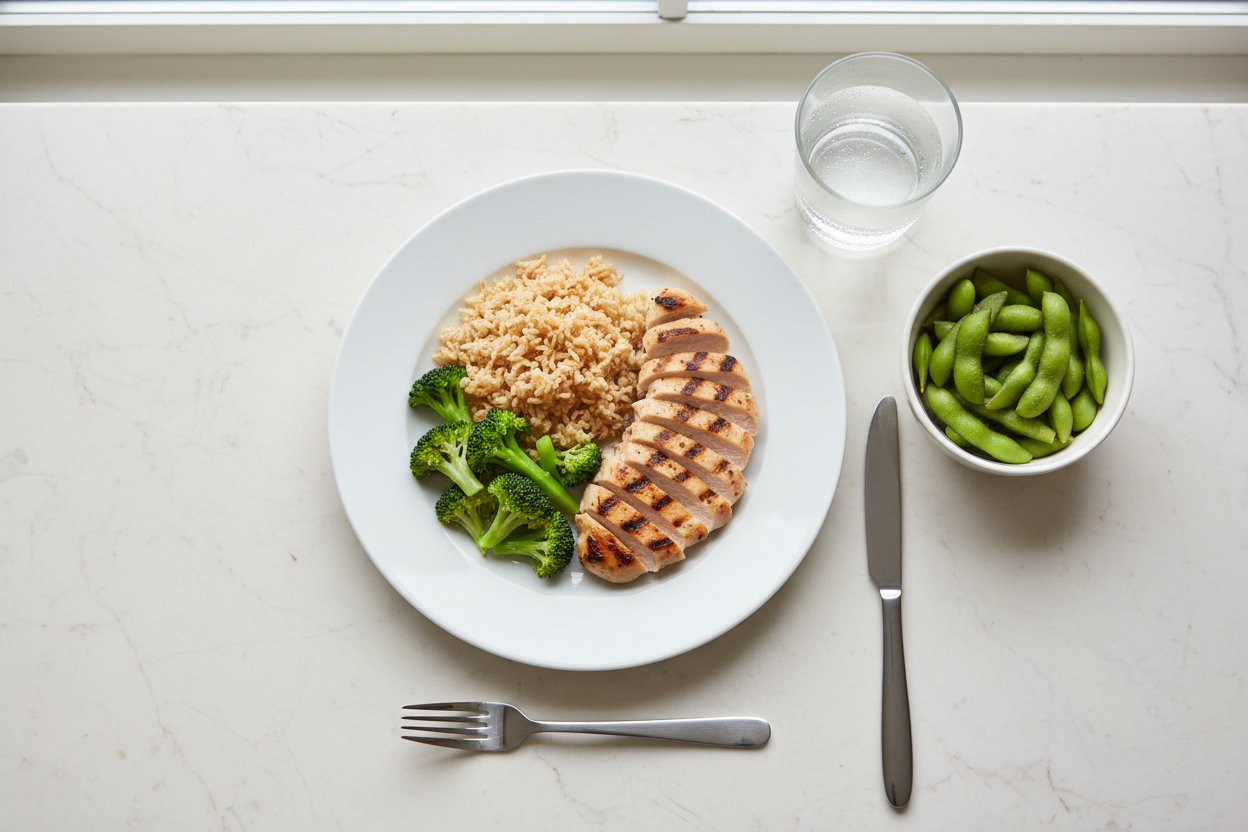
- Enough protein. A deficit raises the protein requirement rather than lowering it — the body is being asked to preserve tissue on less total energy.
- Spread across meals. Repeated moderate servings through the day are used more effectively than one large hit at dinner.
- Resistance training. Protein gives the raw material; training gives the signal to keep the tissue. Neither works properly alone.
03 · Working out your own number
| Activity level | Reference range | 65 kg adult |
|---|---|---|
| Mostly sedentary | 0.8–1.0 g/kg/day | 52–65 g/day |
| Exercise 1–3 days/week | 1.0–1.3 g/kg/day | 65–85 g/day |
| Training hard, in a deficit | 1.6–2.0 g/kg/day | 104–130 g/day |
Split the daily figure across three meals. For the 65–85 g row that is roughly 22–28 g per meal — about the protein in a chicken breast, or one scoop of protein powder.
04 · Why protein powder fits a calorie deficit
The difficulty in a deficit is not knowing the target — it is hitting it without the calories that usually come attached. Whole-food protein sources arrive with fat and carbohydrate. An isolate delivers a high protein figure for a low total calorie figure, which is the entire reason it earns a place in a cutting phase rather than only in a bulk.
05 · A quick self-check
Write down what you ate yesterday, total the protein, divide by your body weight in kg. If the answer sits below the row that matches your activity level, that is the gap to close before changing anything else about the diet.
Related products
This article provides general nutritional information for education. It is not medical advice. Dietary supplements are not medicines and do not treat, relieve or prevent any disease.


